Website building: how to get a site that actually performs
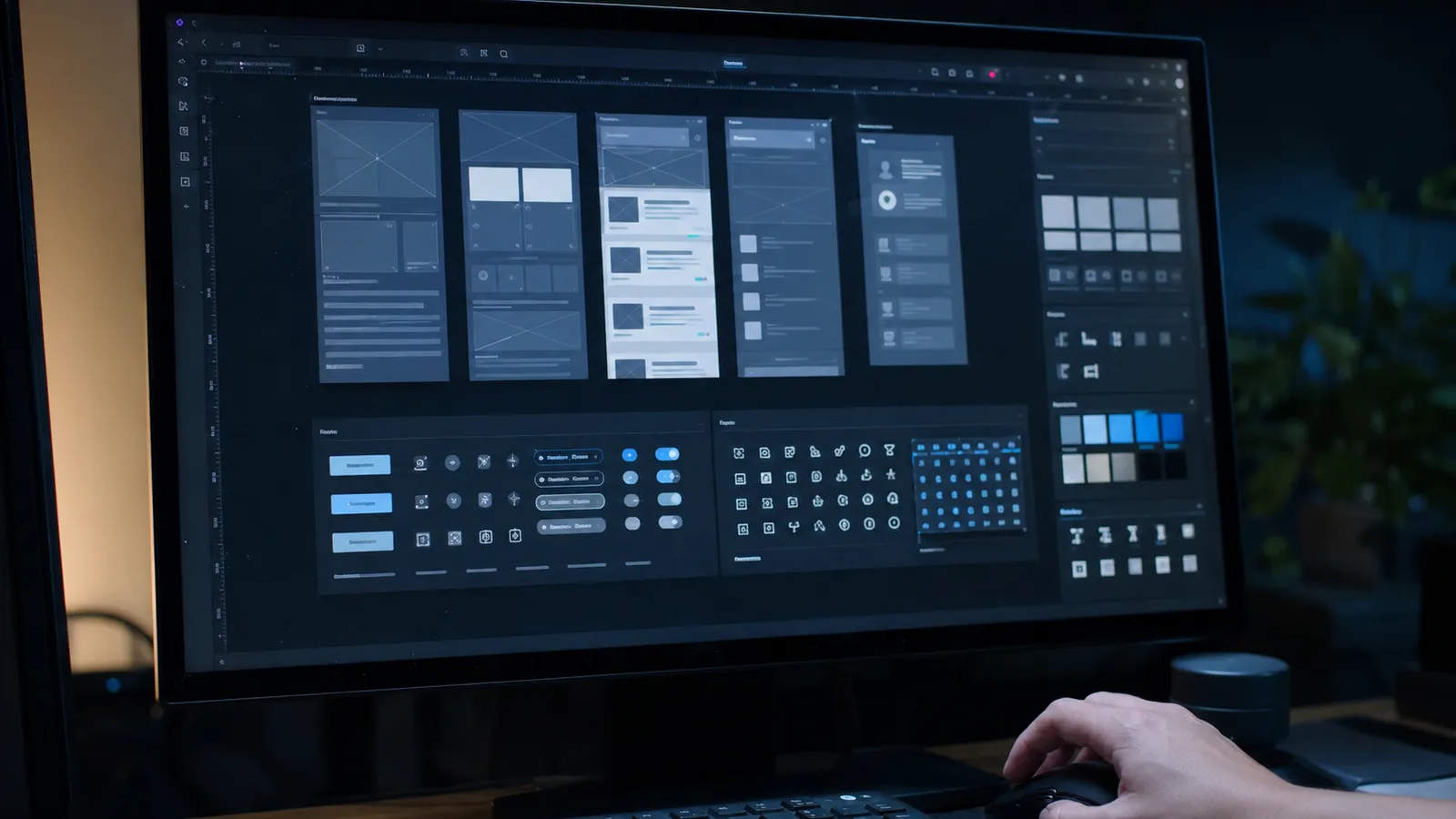
Most business websites are judged on the wrong thing. A site that wins the "looks nice" argument in a meeting can still load slowly, never show up in search, and quietly turn visitors away. A website that performs does three unglamorous things well: it loads fast, it's findable, and it turns a visitor into an enquiry. Looks matter — but they come fourth.
We build websites for a living, and the gap between "a site I'm proud of" and "a site that brings in work" is the thing most owners discover too late. Here's what closes it.
What a website is actually for
A website is not a brochure you put online. It's the part of your business that works while you sleep — and its job is to turn a stranger's attention into a reason to contact you.
That reframing changes every decision. A brochure-brain site optimises for how it looks on the founder's laptop. A performance-brain site optimises for the moment a real person, on a phone, on patchy mobile data, decides whether you're worth an email. Everything below serves that moment: the page that loads before they lose patience, the search result that put them there, the clear next step once they arrive.
If your current site can't tell you how many enquiries it produced last month, it isn't underperforming — you just have no idea whether it's performing at all. That's the first thing worth fixing.
Speed, mobile, and being findable
Three things do most of the heavy lifting, and none of them are visual.
Speed. People leave slow pages — and they leave before they've seen a single thing you wrote. A heavy template stuffed with sliders, pop-ups, and a dozen tracking scripts feels rich in a demo and sluggish in real life. Fast isn't a luxury setting you turn on at the end; it's a consequence of building lean from the start. Search engines treat speed as a ranking signal too, so a slow site is penalised twice — once by the visitor, once by Google.
Mobile. Most of your visitors arrive on a phone. A site that's merely "responsive" can still be miserable to use — tap targets too small, text that needs pinching, a contact form that fights the thumb. Mobile-first isn't a checkbox; it's deciding that the small screen is the real product and the desktop view is the bonus.
Findability (SEO). The most beautiful site in your city is worthless if it never appears when someone searches for what you do. The basics aren't mysterious: a clear page for each thing you offer, honest titles and descriptions, sensible headings, fast clean pages, and content that answers the actual questions people ask. You don't need tricks. You need to be the clearest, most obviously relevant answer — and increasingly, that's what AI search engines reward too.
Custom-built vs template — the honest trade-off
This is where most of the money is won or lost, so we'll be straight about it.
Templates are cheap, fast, and fine for a genuinely simple need — a one-page presence, an early-stage idea you're still testing, a site you mainly need to exist. The cost shows up later: the bloat that slows them down, the visual sameness, and the wall you hit the moment you need something the template didn't anticipate.
Custom-built sites cost more up front and earn it back in the things that compound — speed, search performance, a structure shaped around your actual business, and the freedom to grow without ripping it up. The honest catch is that "custom" can also mean slow and expensive if it's built from zero every time, for no good reason.
That's the gap our customizable web editions are built to close. They're starting points we've already engineered to be fast, mobile-first, and search-ready — then tailored to your brand, content, and goals. You get the polish and performance of a custom build without paying to reinvent the foundations. For a more involved build — a booking system, a client portal, something genuinely bespoke — that lives in our wider web and software work.
Where to start — and what to ask for
You don't need a finished brief to begin. You need to be honest about what the site is for.
Start with the enquiry, not the homepage. Decide the one action you want a visitor to take — call, email, book, buy — and work backwards so every page makes that easy. Then ask any builder, us included, the questions that separate a performing site from a pretty one:
- How fast does it load on a mid-range phone, not a fast laptop?
- Will each service I offer have its own findable page?
- How will I know how many enquiries it produces?
- What happens when I want to add something next year — can I, or do we start over?
If a builder can't answer those plainly, that tells you something. A good site is a tool you keep using, not a project you finish and forget.
Where this leads
A website that performs isn't the flashiest one — it's the one that loads fast, shows up when it matters, and makes contacting you the easy, obvious next step. Most of that is decided before a single colour is chosen.
If you're not sure whether your current site is pulling its weight — or you're starting fresh and want to do it right the first time — browse the web editions to see what a fast, ready-to-tailor starting point looks like, or just tell us what you're trying to achieve. No pitch, no pressure — we'll tell you honestly what your site actually needs.