How we built HR Hub: a real internal platform
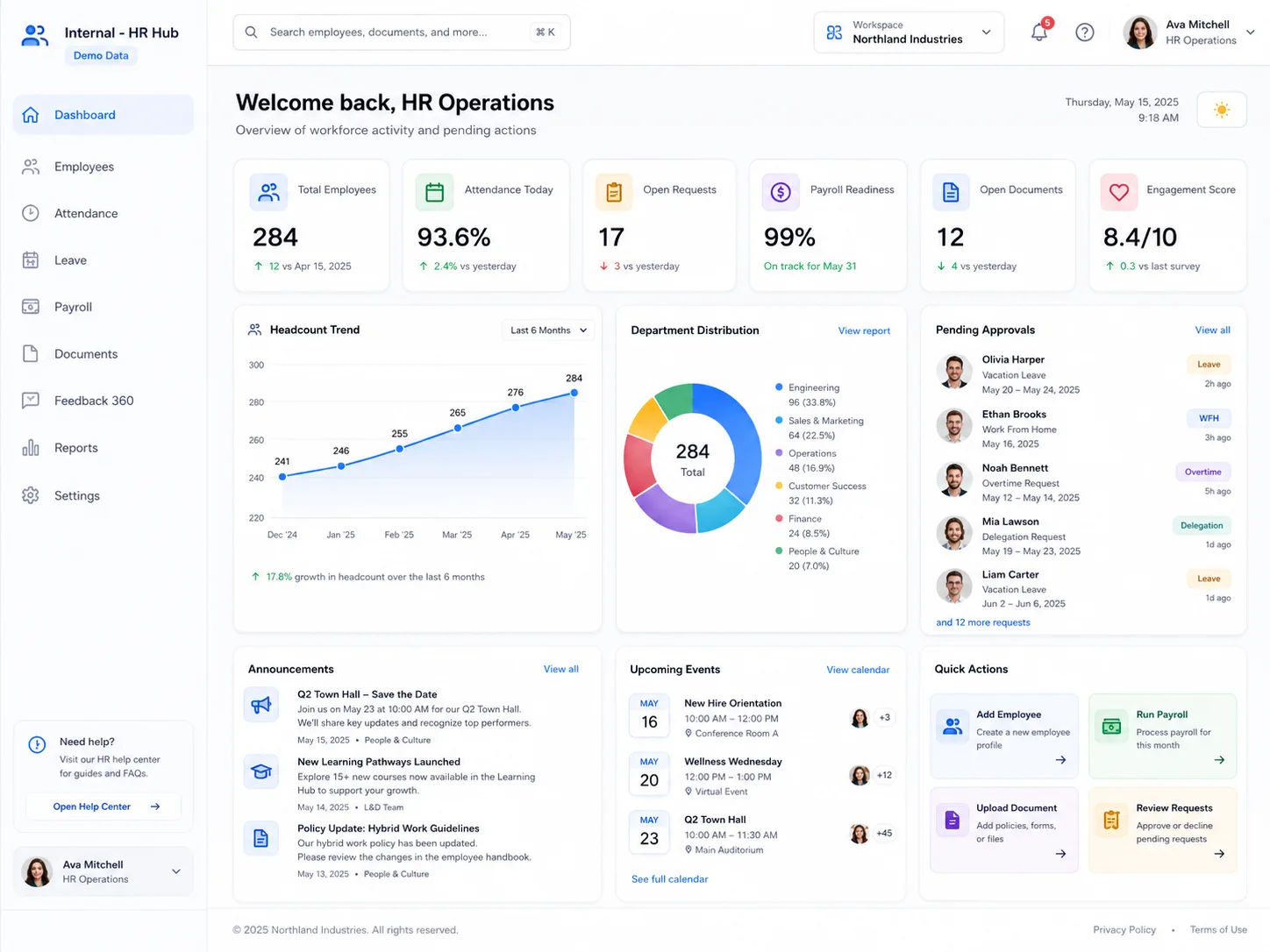
Most "HR software" is a filing cabinet with a login. It stores records, and that's about it. The team we built HR Hub for didn't need another filing cabinet — they needed a cockpit. A single place where the people running the company could see their workforce, act on it, and stop stitching the picture together from a dozen spreadsheets.
This is the story of how that platform came to be, and the decisions that shaped it.
The problem: a company run from spreadsheets
When we first sat down with them, headcount lived in one spreadsheet, attendance in another, leave requests in an email folder, and payroll in a desktop program nobody but one person could open. Every monthly report meant a day of copy-paste, reconciliation, and quiet panic about whether the numbers matched.
The pain wasn't any single tool — each one worked fine on its own. The pain was the gaps between them. Nobody could answer a simple question like "how many people are out next week, and what does that do to payroll?" without an afternoon of manual work. Decisions that should take minutes took days.
What we set out to build
We agreed on one guiding rule before writing any code: everything in one place, live. No exports, no overnight syncs, no "let me check and get back to you." If a manager asked a question about the workforce, the answer should already be on screen.
That rule shaped four core modules:
- A live dashboard — headcount, engagement, and the metrics leadership actually watches, updating in real time rather than once a month.
- Employee records — one clean profile per person, the single source of truth everything else reads from.
- Attendance and leave — requests, approvals, and balances in one flow, visible to both the employee and their manager.
- Payroll with real-time insight — not a black box run once a month, but numbers you can see forming as attendance and leave change.
How we worked
We didn't disappear for six months and come back with a finished product. We scoped the modules, designed the flows on paper first, and shipped the dashboard early — deliberately incomplete — so the team could use it and tell us where it was wrong.
That early feedback changed the product. The leave approval flow we'd designed looked clean in a mockup but didn't match how their managers actually worked; we found that out in week three, not at launch. Building in the open like this is slower to demo but far faster to get right — and getting it right is the only thing that matters once people depend on it daily.
The result
Today HR Hub is the screen that company opens every morning. The monthly report that used to eat a day now exists as a live view that's simply always current. Managers approve leave from the same place they see its effect on coverage. Payroll stopped being a once-a-month act of faith.
More importantly, the data finally trusts itself. Because every module reads from the same employee records, there's no longer a "which spreadsheet is right?" argument. There's one answer, and it's live.
What it means for your team
HR Hub isn't a product you can buy a license for — it was built for one company's way of working. But the approach is exactly how we build for everyone: scope the real pain, design before we code, ship early, and refine against real use.
If your team is running something important out of a patchwork of spreadsheets, that's usually the clearest sign a tailored platform will pay for itself. Whether it's people, logistics, or something only your business does, we'd be glad to talk through what a system of your own could look like.